
A washing machine leaks most often from a fill hose, the drain hose or household standpipe, the drain pump or pump filter, the door gasket on a front-load washer, oversudsing from too much detergent, an internal tub seal, or a water inlet valve that will not close. The fastest way to narrow it down is to note where the water first appears and when in the cycle it shows up.
A puddle under the washer rarely sits directly beneath the part that failed. Water travels along the base of the cabinet before it reaches the floor, which is why so many leaks get misdiagnosed. Before you order parts, work through the two questions below.
Stop the Leak Safely First
If there is standing water on the floor:
- Stop the wash cycle.
- Shut off the hot and cold water supply valves behind the machine.
- Unplug the washer only if you can reach the plug or breaker from a dry spot. If you cannot, switch off the breaker instead.
- Dry the area before you start inspecting anything.
Whirlpool’s own troubleshooting guidance is the same: turn the washer off, unplug it, and close the wall valves before investigating a leak. Never reach behind or underneath a plugged-in washer while standing in water.
Step 1: Note When the Washer Leaks
Cycle timing narrows the problem faster than checking every component. Run the machine only if the leak is minor and you can watch it safely.
| When the leak appears | Check first | Likely source |
|---|---|---|
| During filling | Rear connections, dispenser | Supply hose, rubber washer, inlet valve, detergent drawer |
| During washing | Door and tub area | Door gasket, oversudsing, tub seal, internal hose |
| During draining | Bottom and rear | Drain pump, pump filter, drain hose, standpipe |
| During spinning | Door, tub, drain system | Off-balance load, gasket, pump, tub cover seal |
| After the cycle ends | Floor and drain area | Slow hose leak, pump housing, household drain |
| While the washer is off | Inside the tub | Water inlet valve not closing |
Maytag splits washer leaks the same way fill, spin, and drain which makes timing a genuinely useful diagnostic clue rather than a guess.
Step 2: Note Where the Water Appears
- Behind the machine points to supply or drain connections.
- Front of the cabinet, below the door points to the gasket, dispenser, or water tracking down from higher up.
- Center underneath points to the pump, tub seal, or an internal hose.
- Around the standpipe, with a dry washer cabinet points to household plumbing, not the appliance.
1. A Fill Hose or Water Supply Connection Is Leaking
Start behind the washer, because this is the most common and the cheapest fix.
The hot and cold fill hoses connect household water to the machine. A loose fitting, a missing or flattened rubber washer, a crack, a bulge, or corrosion lets water escape under full line pressure — which is why these leaks often look far worse than they are.
Check for moisture at:
- Hot and cold hose connections at the wall and at the washer
- The shutoff valves themselves
- Rubber washers inside each inlet hose coupling
- Cracks, bulges, or soft spots along the hose length
- Corrosion or mineral crust on metal fittings
Whirlpool recommends confirming both fill and drain hoses are securely attached and that the inlet hose washers are present and undamaged.
If the water shows up mainly during fill, fix this before assuming an internal failure. Rubber supply hoses have a service life replacing them with braided stainless steel lines every five years is cheap insurance against a burst hose.
2. The Drain Hose or Household Drain Is the Real Problem
A washing machine leaking from the bottom during the drain cycle may have nothing wrong with it.
A cracked, kinked, loose, or badly installed drain hose releases water while the pump is pushing. Separately, the standpipe or household drain can simply back up because it cannot accept water at the rate the washer discharges it.
Watch the drain area as the machine enters its drain cycle. If water rises out of the standpipe or backs up into a laundry sink, the fault is in the home’s plumbing.
Maytag lists damaged drain hoses and loose hose clamps among the causes of drain-cycle leaks, and Sears documentation recognizes clogged standpipes as a source of laundry-area water.
This distinction matters financially. An appliance technician repairs the washer; a plumber clears a blocked drain. Diagnosing it correctly stops you paying for the wrong trade.
3. The Drain Pump or Pump Filter Is Leaking
The drain pump forces water out of the tub. A cracked pump housing, a failed seal, a split internal hose, or a loose clamp lets water out underneath the machine.
On many front load washers, the drain pump filter is also a culprit. Lint, coins, hair pins, and debris collect around it, and a clogged or improperly seated filter can leak during draining. Whirlpool notes this specifically for applicable models.
Signs it is the pump:
- Water appears only during the drain cycle
- A grinding or humming noise while draining
- The washer drains slowly or stops mid-cycle with an error code
- Water pools toward the center or rear underside
Remember that the puddle will not necessarily sit under the failed part. If reaching the pump means removing cabinet panels, that is the point to move from inspection to professional diagnosis.
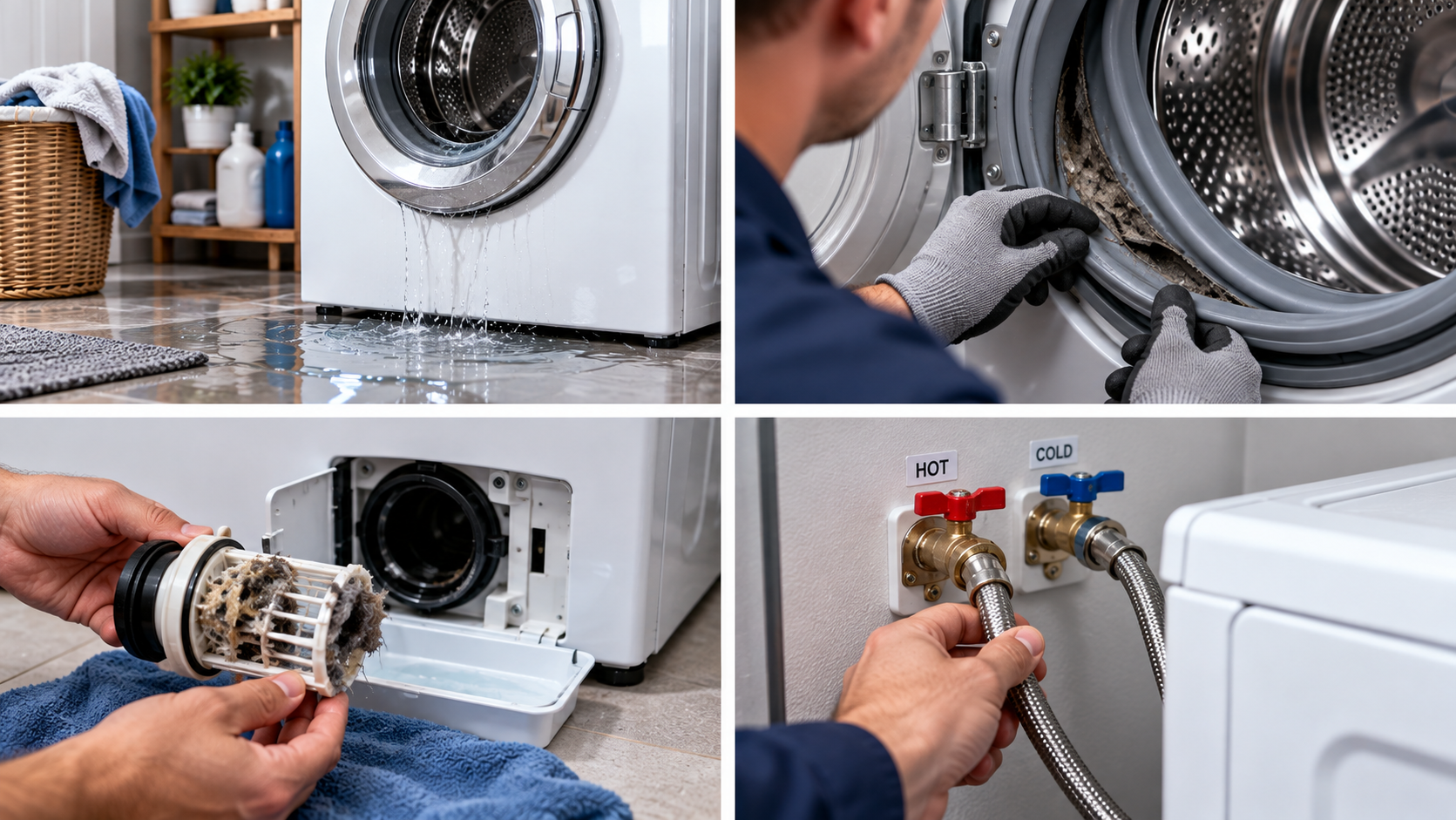
4. The Door Gasket Is Leaking on a Front Load Washer
If a front load washer leaks from the door, inspect the rubber door boot.
The gasket has to seal the door against the tub every cycle, and anything caught in its folds breaks that seal.
Pull back the folds and look for:
- Coins, hair clips, and small garments
- Lint and detergent residue
- Mold or slime buildup
- Tears, cuts, or worn patches
- Sections that no longer sit flat against the glass
Whirlpool recommends cleaning debris from the seal and checking beneath the folds. Samsung identifies damaged gaskets, trapped debris, detergent buildup, and poor door sealing as causes of front-door leaks.
Do not assume every front leak is the gasket. Water from the detergent dispenser or a failed internal hose runs down the inside of the cabinet and exits at the door, producing an identical puddle. Wipe the gasket dry, run a short cycle, and watch where the first drop forms.
5. Too Much Detergent, Overloading, or an Unlevel Machine
A leak does not always mean a broken part.
Oversudsing is the classic offender in high efficiency washers. Non-HE detergent, or too much HE detergent, creates suds that interfere with normal water movement and push water out around the dispenser or door. Samsung lists non-HE detergent, excess detergent, blocked drawers, and debris as causes of dispenser leaks.
Overloading and imbalance matter too. Bulky blankets, towels, and rugs create violent movement during spin. If the machine is not level, that vibration worsens and water sloshes past seals that would otherwise hold. Whirlpool notes that overloaded or improperly leveled washers can leak, and Maytag identifies an off-balance machine as a spin-cycle leak cause.
Quick test: if your washer only leaks on large or heavy loads, run a small load with half the usual detergent before you buy a single part.
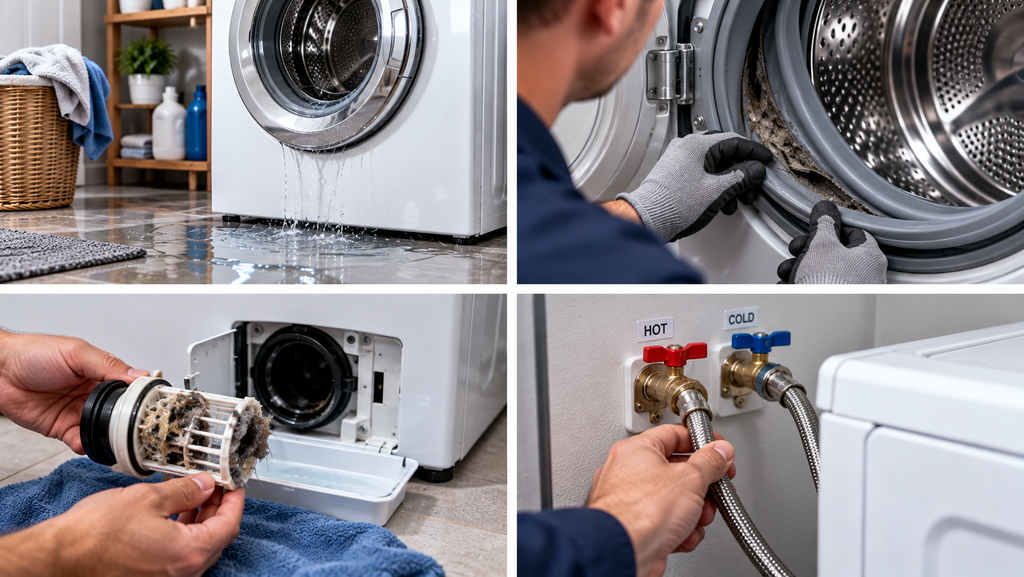
6. A Tub Seal, Internal Hose, or Water Level Switch Has Failed
Leaks from deep inside the cabinet are the serious ones.
A washer has an inner basket and an outer water-holding tub. Tub seals, tub cover gaskets, internal hoses, and clamps keep water where it belongs. Maytag identifies the tub seal, the drain system, and on some top-load models, the tub cover gasket as sources depending on cycle timing, and notes that a failing water level switch can let the machine overfill. Sears likewise flags damaged outer tubs and faulty pressure switches on front load models.
Clues pointing inside:
- Water under the center of the machine
- Leaking during agitation specifically
- Water level rising abnormally high in the tub
- Rust-tinged water, which suggests a long-running internal leak
- A leak that persists after every external hose has been ruled out
These repairs require dismantling the cabinet and are best left to a technician. On older machines, a tub seal or bearing job can approach the cost of replacement; get a quote before committing.
7. The Water Inlet Valve Leaks Even When the Washer Is Off
One symptom is close to conclusive: water appearing in the tub while the machine is switched off.
The inlet valve controls incoming hot and cold water. If debris stops it from sealing, or the solenoid fails, water keeps trickling in with no cycle running. Whirlpool points to the inlet valve when water drips into an idle washer, and Sears explains that debris can prevent the valve from closing and cause continuous filling.
If you repeatedly find clean water standing in the drum hours after a wash, the valve needs attention. Closing the wall valves between washes will confirm it; if the filling stops, the valve is at fault.
A control board problem can mimic this. Sears notes that if filling happens only while the washer remains plugged in, the timer or electronic control may need diagnosis instead.
Front Load vs Top Load Washer Leaks
| Front load washer | Top load washer |
|---|---|
| Door gasket/boot seal | Fill hoses and connections |
| Detergent dispenser and drawer | Water level control switch |
| Drain pump filter (where accessible) | Tub cover gasket on applicable models |
| Drain pump and internal hoses | Tub seal and internal hoses |
| Outer tub and bellows | Drain pump and machine balance |
Not every washer has an accessible pump filter. Whirlpool advises following the guidance for your specific model, since filter design and service access vary widely between machines.
Is the Washer Leaking, or Is the Laundry Drain Backing Up?
This one question prevents a lot of unnecessary appliance repairs.
If the cabinet stays dry and water appears around the standpipe, the drain is the problem. Other confirming signs: nearby sinks draining slowly, gurgling from the laundry sink during the washer’s drain cycle, or water backing up only on large loads when discharge volume peaks.
Investigate the plumbing before replacing washer parts.
When to Stop and Call a Washer Repair Technician
Stop DIY troubleshooting when:
- The leak originates inside the cabinet
- The drain pump is cracked or its housing is wet
- You suspect the tub or tub seal
- Electrical components, wiring, or the control board are wet
- Diagnosis requires testing the inlet valve, water level sensor, or control board
- The washer throws an error code alongside the leak
- Accessing the part means removing panels or tipping the machine
Service King LLC handles washing machine diagnosis and repair, including drainage faults, spin problems, unusual noises, error codes, and electrical malfunctions. See our full washing machine repair services for what we cover.
Related reading: Washing Machine Not Draining? 7 Causes and What to Check
Frequently Asked Questions
Why is my washing machine leaking from the bottom? Bottom leaks usually come from the drain pump, the pump filter, an internal hose, or the tub seal. Water travels along the base before it reaches the floor, so the puddle position is not a reliable guide. Note whether the leak happens during fill, wash, drain, or spin to narrow it down.
Can I still use a washing machine that is leaking? No. Even a small leak can reach electrical components, damage flooring and subfloor, and lead to mold. Shut off the water supply valves and keep the machine off until the source is identified.
Why does my front-load washer leak from the door? Most often, the door gasket is torn, worn, or holding debris such as coins, lint, hair, or detergent residue that breaks the seal. Water running down from the detergent dispenser can also exit at the door and look identical.
Why is my washer leaking only during the spin cycle? Spin-cycle leaks usually point to an off-balance or overloaded drum, an unlevel machine, a worn door gasket, or a tub cover seal. Try a smaller load and check that all four feet sit firmly on the floor.
Is a leaking washing machine worth repairing? Hose, gasket, filter, and pump repairs are almost always worth it. Tub seal and bearing failures on a machine over ten years old often cost enough that replacement makes more sense. A technician can quote both before you decide.
Why is there water in my washer when it has not been used? A water inlet valve that will not close fully, usually because of debris, lets water trickle in while the machine is off. Less commonly, a control board fault energizes the valve. Closing the wall valves overnight will confirm which.
How do I stop my washing machine leaking in future? Replace rubber fill hoses with braided steel lines every five years, use the correct amount of HE detergent, avoid overloading, wipe the door gasket dry after each wash, clean the pump filter regularly if your model has one, and keep the machine level.
Washing Machine Leaking in Bridgeport, CT?
Note where the water first appears and which part of the cycle is running when it does. Those two observations cut diagnosis time dramatically, whether you fix it yourself or call someone.
If external hoses, detergent, loading, leveling, and the household drain do not explain the leak, book professional washing machine repair rather than replacing parts based on the puddle alone.
Service King LLC provides appliance repair for washing machines and other major household appliances across Bridgeport and the surrounding Fairfield County area. A technician can trace the leak through the supply system, door seal, drain pump, hoses, tub, water level controls, and electrical components to find the actual source.
Call 203-904-8850 or request a service visit online. Mon–Fri 8:00 am – 5:00 pm, Sat 9:00 am – 1:00 pm.