
A washer not draining usually means water cannot complete the path from the washer tub to the household drain. The cause may be simple, such as a clogged pump filter, kinked drain hose, unbalanced load, or too much detergent. It can also involve a failed drain pump, lid lock, wiring problem, or blocked standpipe.
Start with what you can see and hear. Standing water points toward a drainage problem. If the tub is empty but the clothes are soaking wet, the washer may also have a spin problem.
How a Washing Machine Drains Water
The basic drain path is:
Washer tub → drain pump → pump filter or coin trap → drain hose → standpipe or laundry sink → household drain
During the drain cycle, the pump pushes water out of the tub. A filter may catch lint and small objects before they reach the pump. The drain hose then carries the water into the home plumbing.
Whirlpool notes that filter design varies by model and that some washers do not have a homeowner accessible filter. Start with the model number and owner manual rather than assuming every washing machine opens the same way.
What to Do If Your Washer Is Full of Water
If there is standing water in the washing machine, deal with it before removing filters or hoses.
Unplug the washer before opening any service access intended for homeowners. Some front-load washers have a small emergency drain hose near the drain pump filter. Place towels and a shallow pan or bucket nearby and follow the manufacturer’s instructions for releasing the water slowly.
Other machines use different methods, so follow the instructions for your specific model.
Once the tub is empty, you can inspect the drain system more safely.
Is the Washer Not Draining or Not Spinning?
These symptoms often occur together, but they are not the same problem.
If water remains in the tub after the cycle, focus first on the pump filter, drain pump, drain hose, standpipe, and drain controls.
If the tub is empty but the clothes are soaking wet, the washer may have drained correctly but failed to reach the expected spin speed. An unbalanced load, bulky item, low spin setting, or lid or door lock problem can leave clothes wetter than normal.
1. The Drain Pump Filter or Coin Trap Is Clogged
On washers with an accessible drain pump filter, this is one of the first places to check.
Lint, coins, hair ties, small socks, and other debris can collect in the filter or pump cavity. You may notice standing water, a long drain cycle, a drain error code, or a humming sound as the pump tries to move water through the blockage.
Before opening the filter, unplug the washer and follow the owner’s manual because access differs by model.
Whirlpool specifically notes that a clogged pump filter can prevent proper drainage on applicable front-load models.
If the filter is clear but the washer still hums without moving water, inspect the pump and drain hose next.
2. The Drain Hose Is Kinked, Clogged, or Installed Incorrectly
A kink can restrict water flow. A clog inside the hose can slow drainage. Incorrect installation can also cause siphoning, backflow, or water returning after the washer appears to drain.
Whirlpool warns that the position of the drain hose inside the standpipe and the need for an air gap matter on applicable models. If the hose sits incorrectly, water can siphon, or the washer may not drain normally.
Do not use one standpipe height or hose insertion measurement for every washer. Installation requirements vary by model.
If different washers develop the same drainage problem in the same laundry location, inspect the standpipe and household plumbing before blaming the appliance.
A real repair discussion documented this exact situation. Three washers showed similar drain and spin problems in the same location, and correcting the drain setup solved the issue. That does not prove every repeated washer problem is caused by plumbing, but it is a valuable diagnostic clue.
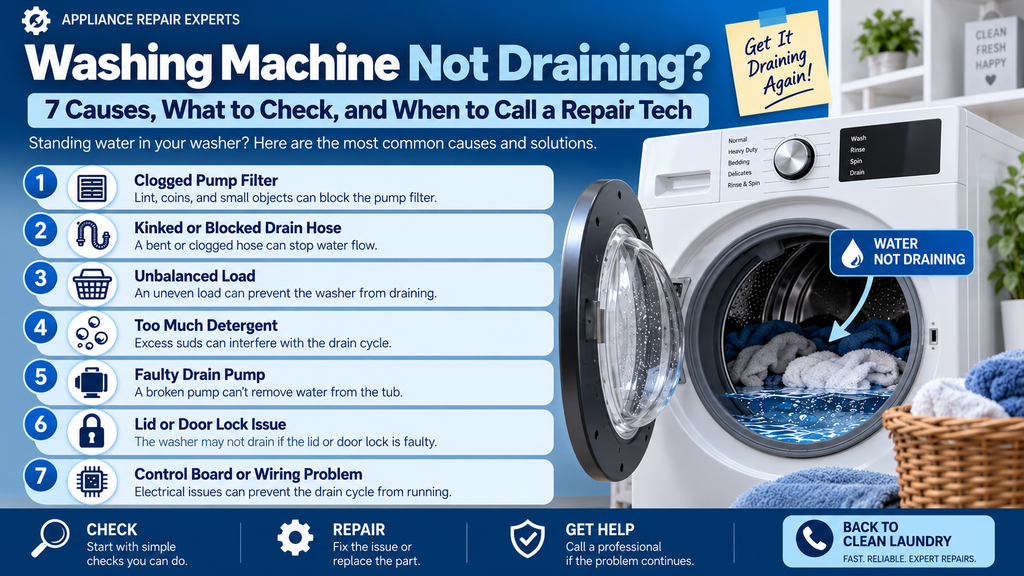
3. The Drain Pump or Pump Impeller Has Failed
The drain pump actually moves water out of the washing machine.
It can fail electrically, mechanically, or because debris jams the pump impeller.
Sound can provide useful clues.
A washer humming but not draining may have a pump that is receiving power but cannot move water because of an obstruction or internal failure.
A grinding noise during draining may point toward debris around the impeller or damage inside the pump.
If the filter and hose are clear but water still remains during a drain and spin cycle, the pump becomes a stronger suspect.
A technician may need to inspect the impeller, pump motor, wiring, and electrical supply before confirming pump failure.
4. The Lid Switch, Lid Lock, or Door Lock Is Not Engaging
Washers use safety devices to confirm that the lid or door is secure before certain portions of the cycle continue.
The relationship is:
Lid or door status → control system → permission to drain or spin
A top-load washer may use a lid switch or lid lock assembly. A front-load washer normally uses a door lock.
If the control does not receive the expected signal, the washer may pause or refuse to complete the drain and spin sequence.
Look for:
• Repeated clicking near the lid or door
• A lid or door that will not latch
• A lock-related error code
• A cycle that repeatedly stops at the same point
Do not bypass a safety lock for normal use. A faulty lock, switch, wiring circuit, or electronic control may require professional diagnosis.
5. The Load, Cycle, or Detergent Is Preventing Proper Drain and Spin
Not every wet load means a component has failed.
An oversized or unbalanced load can prevent the washer from reaching full spin speed. Bulky items can collect on one side of the drum. A delicate or hand wash cycle may use a lower spin speed.
Too much detergent can also create excessive suds and interfere with normal washer performance.
Whirlpool recommends checking load balance, cycle selection, spin speed, and detergent use when clothing remains too wet, or the washer does not appear to drain completely.
If your washer requires High Efficiency detergent, use the type and amount recommended by the manufacturer.
Redistribute the load and try a drain and spin cycle before assuming the pump or control board has failed.
6. The Standpipe or Household Drain Is Blocked
Sometimes the washing machine is working correctly, and the household drain cannot accept the water.
A blocked standpipe, laundry drain, or plumbing line can cause:
• Slow drainage
• Water backing up
• Standpipe overflow
• Water returning toward the washer
Watch what happens when the washer drains.
If water rises quickly in the standpipe, backs up into a laundry sink, or nearby drains are also slow, the problem may be in the home plumbing rather than the washing machine.
An appliance technician repairs the washer. A plumber handles a blocked household drain.
This distinction can save you from replacing a perfectly good drain pump.
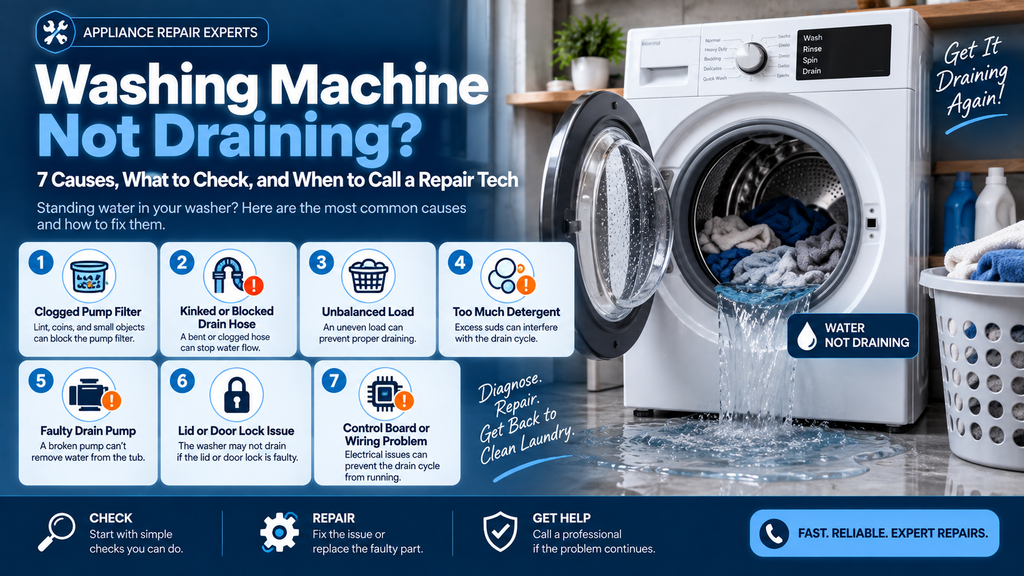
7. A Wiring or Control Board Problem Is Stopping the Drain Pump
Electrical problems belong later in the diagnostic process, after the physical drain path has been checked.
The pump needs the correct electrical signal to operate. A damaged wiring harness, loose connection, failed lid or door lock circuit, or control board fault can stop the drain pump even when the pump itself is mechanically sound.
An error code can help narrow the problem, but codes vary by brand, model, and series.
Write down the exact error code and model number before clearing or resetting anything. Then check the manufacturer documentation.
Testing pump voltage, wiring continuity, lock circuits, or control board output usually requires a multimeter and safe access to internal electrical components.
That is a good point to stop basic troubleshooting and call an appliance technician.
What Does Your Washer Sound Like?
Sound should support the diagnosis rather than replace it.
Humming during the drain cycle: The drain pump may be powered but blocked or failing.
Grinding during draining: Debris may be interfering with the pump impeller, or the pump may be damaged.
Repeated clicking near the lid or door: The lid lock or door lock may not be engaging correctly.
Silence during the drain cycle: The issue may involve the pump motor, wiring, lock circuit, or control system.
Combine sound with standing water, error codes, pump operation, and drain hose condition before deciding which part has failed.
Front Load Versus Top Load Washer Drain Problems
A front-load washer and a top-load washer should not automatically receive the same troubleshooting instructions.
A front-load washer may have an accessible pump filter, coin trap, emergency drain tube, and door lock.
A top-load washer may rely more heavily on a lid switch or lid lock, while its pump or filter may not be accessible without disassembly.
Whirlpool confirms that filter design and accessibility vary by washer model.
Always check the model instructions before opening panels.
When Should You Call a Washer Repair Technician?
Consider professional washer repair when:
• The filter and drain hose are clear, but water remains in the tub
• The drain pump repeatedly hums or grinds
• The lid or door lock will not engage
• Drain error codes keep returning
• Water continues returning after draining
• Internal wiring needs testing
• The pump requires replacement
• The control board may not be operating the drain pump
• Basic drain and spin checks do not solve the problem
Service King LLC lists washer drainage problems, spin cycle malfunctions, unusual noises, error codes, and electrical faults among the washing machine issues its technicians handle.
If basic troubleshooting has not restored proper drainage, use Service King’s washing machine repair service for professional diagnosis rather than replacing parts based on guesses.
A technician can inspect the drain path, test the pump and lock circuits, examine the wiring, and determine whether the problem comes from the washer, its installation, or the household plumbing.
Washer Not Draining in Bridgeport, CT?
If your washer is full of water, drains slowly, makes unusual noises, or leaves your clothes soaking wet, start with the filter, drain hose, standpipe, load, and cycle settings.
If those checks do not solve the problem, Service King LLC can diagnose the drain pump, pump impeller, lid switch, door lock, wiring harness, control board, and related washer components.
You can also visit Service King appliance repair in Bridgeport CT to request professional appliance diagnosis.
A clear diagnosis can prevent unnecessary parts replacement and help determine whether the actual problem belongs to the washing machine, the drain installation, or the household plumbing.